THE LIGHTS ARE MOVING EAST
West Texas Built the Myth of Friday Night Lights. North Texas May Be Taking It From Them.
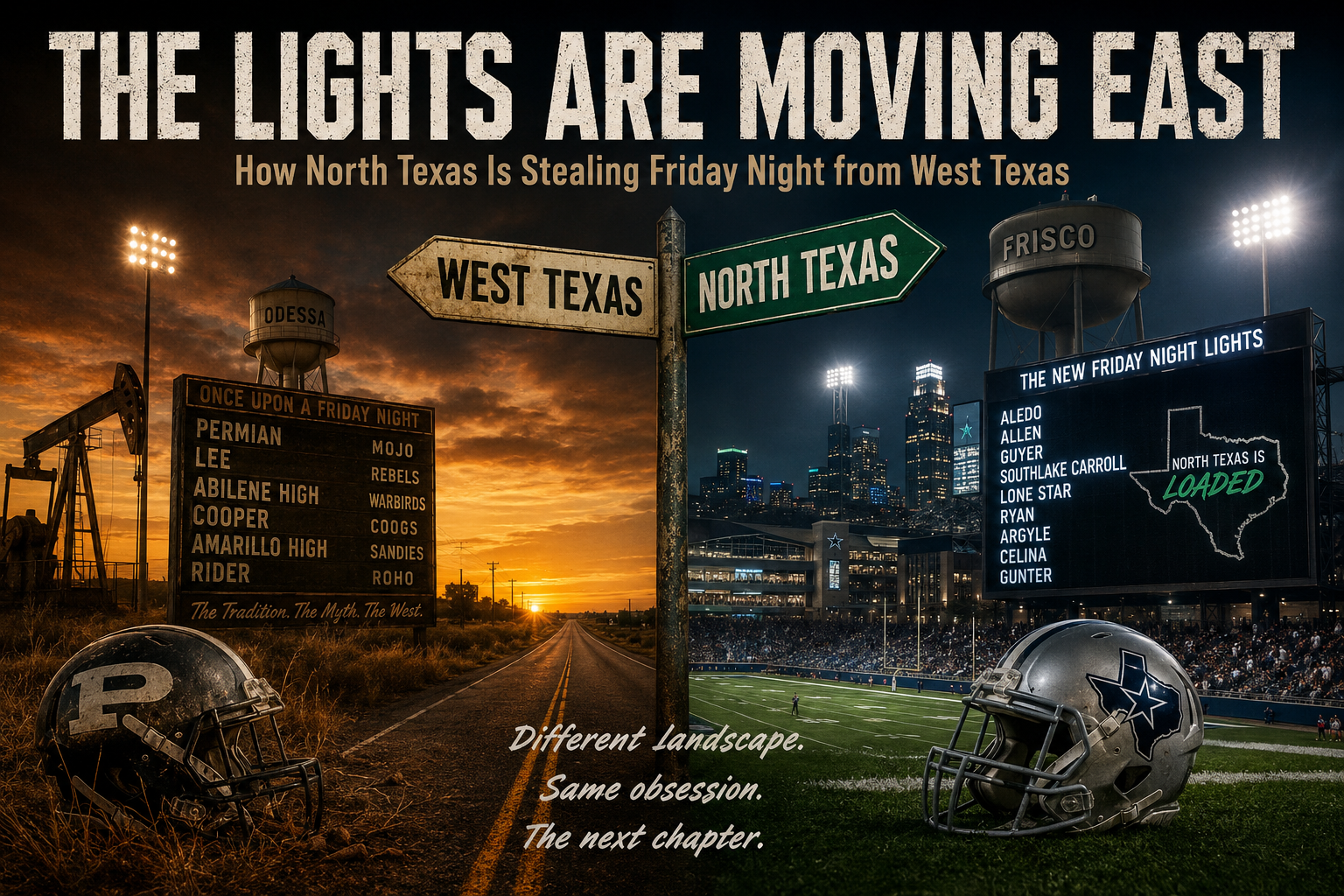
There was a time when you didn't have to explain West Texas high school football.
You just had to say the names.
Permian.
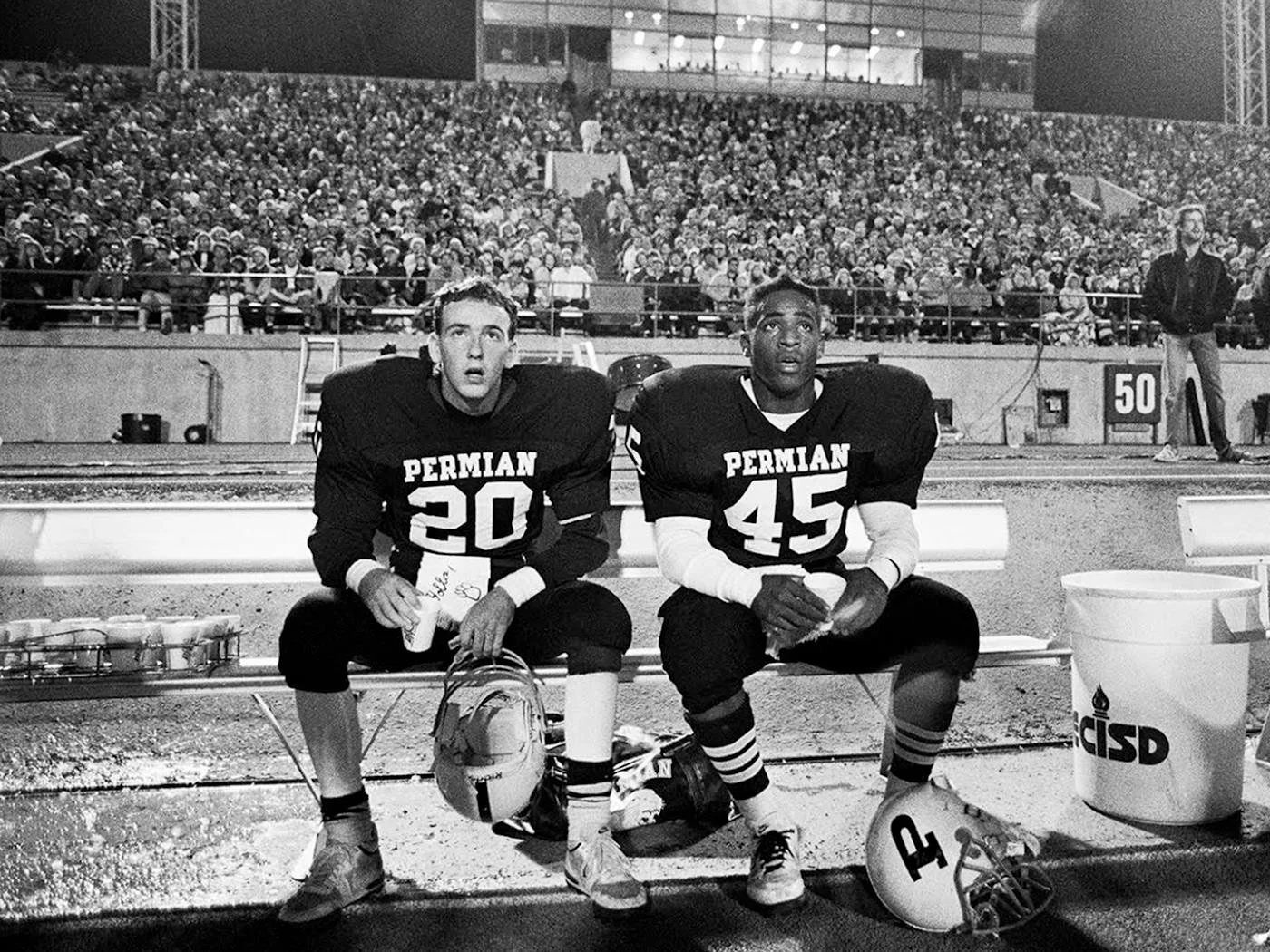
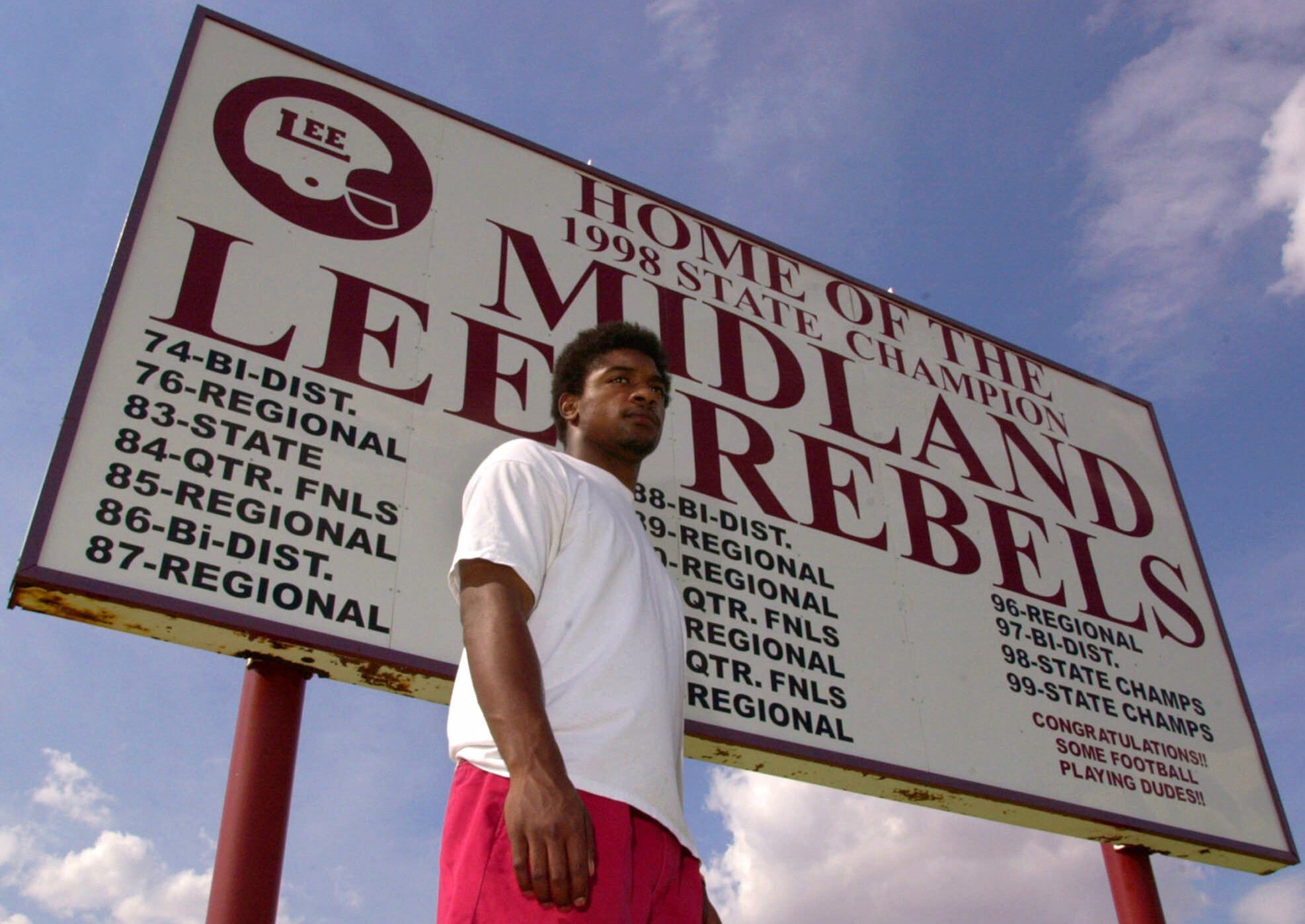
Midland Lee.
Abilene High.
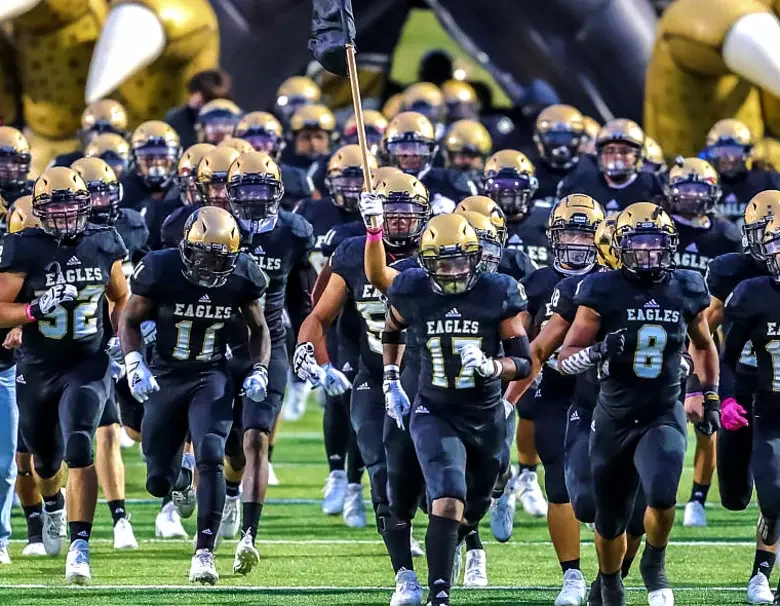
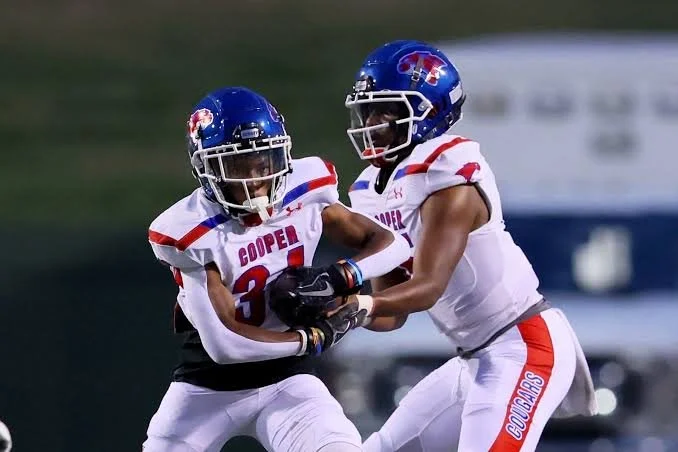
Abilene Cooper.
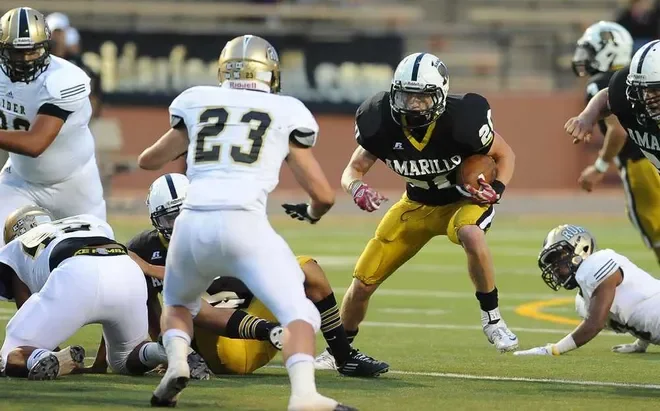
Amarillo.
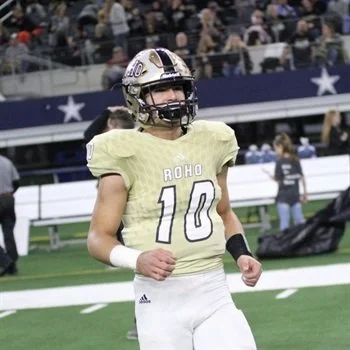
Wichita Falls Rider.
Those weren't just schools.
They were identities.
They were places where Friday night seemed to matter considerably more than any reasonable person could explain on Monday morning.
Places where stadium lights appeared on the horizon before the town did. Where a seventeen-year-old quarterback could be more recognizable than the mayor. Where grown men could tell you the score of a playoff game played twenty-seven years ago but occasionally needed a minute to remember their anniversary.
This was West Texas.
And nobody did Friday night quite like West Texas.
There was MOJO in Odessa.
There was ROHO in Wichita Falls.
There were Rebels at Lee.
Warbirds at Abilene High.
Coogs at Cooper.
Sandies in Amarillo.
They weren't really nicknames.
They were family names.
Passed from fathers to sons, stitched onto letter jackets, painted across helmets and carried into stadiums where everybody seemed to know everybody—and everybody definitely knew who should be starting at quarterback.
And, of course, there was Odessa.
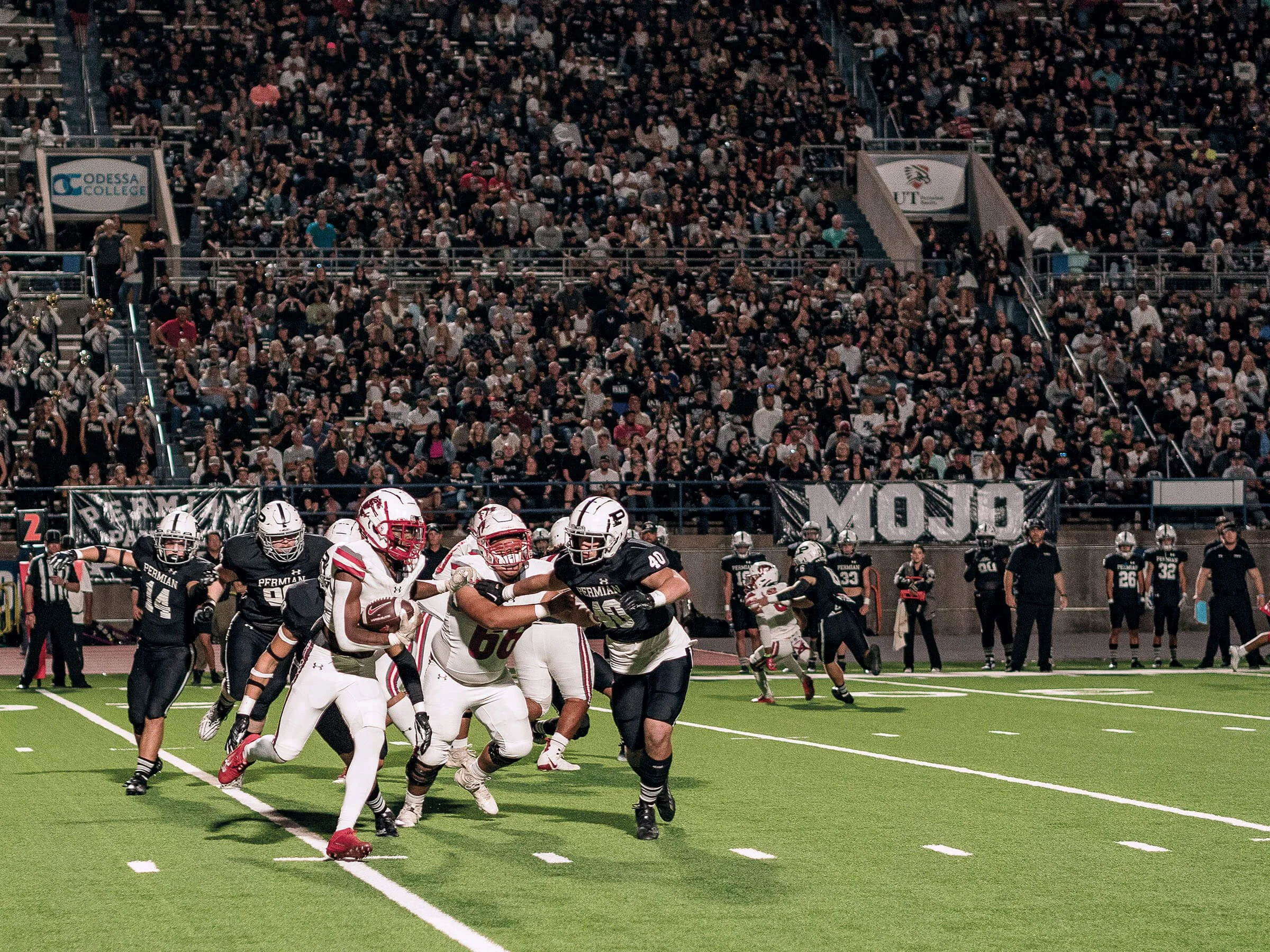
There will probably always be Odessa.
Because somewhere along the way, the Permian Panthers stopped being merely a football program and became America's image of Texas high school football.
Black jerseys.
MOJO.
Ratliff Stadium.
Pumpjacks against an endless horizon.
A town measuring autumn not by months, but by Fridays.
It was romantic.
It was excessive.
It was beautiful.
Sometimes it was probably a little unhealthy.
But it was unmistakably Texas.
For decades, when America imagined Friday Night Lights, this was the Texas it imagined.
The problem is that Texas didn't stop changing just because we liked the story.
Neither did Texas high school football.
The lights are still burning in West Texas.
But they're getting a little dimmer.
Because while everybody was looking toward Odessa and remembering what Friday night used to be, the center of gravity in Texas high school football quietly began moving east.
Toward Denton.
Toward Celina.
Toward Melissa.
Toward Argyle.
Toward Allen.
Toward Frisco.
Toward that seemingly endless stretch of North Texas where yesterday's cow pasture becomes tomorrow's subdivision and, approximately eleven minutes later, somebody announces construction of another high school.
And if the 2026 preseason rankings tell us anything, it's this:
North Texas Friday Night Lights aren't coming.
They're already here.
THE GHOSTS OUT WEST
Start with the old names.
Odessa Permian isn't ranked in the 2026 preseason 6A Top 25.
Neither is Midland Legacy—the school generations of Texans still instinctively call Midland Lee.
Abilene Cooper isn't there.
Amarillo High isn't there.
Abilene High is the exception, hanging on at No. 18 in Class 5A Division I, carrying the flag for a collection of traditional West Texas big-school powers that once seemed permanently stitched into the Texas football landscape.
But even that tells part of the story.
Because these weren't ordinary programs.
These were the programs.
Permian.
MOJO.
Lee.
Rebels.
Abilene.
Warbirds.
Cooper.
Coogs.
Rider.
ROHO.
Names from cities that once looked enormous on the Texas high school football map.
Today, you can scan the top of the state's larger classifications and increasingly find yourself looking somewhere else.
And nowhere is the changing landscape more painfully visible than Wichita Falls.
GOOD LORD, WICHITA FALLS
If you want to understand how much West Texas football has changed, you don't even need to look at the rankings.
Just drive around Wichita Falls.
Rider is a junior high now.
Let that sentence sit there for a moment.
Wichita Falls Rider.
The Raiders.
ROHO.
Black and gold.
Decades of Friday nights, playoff games, rivalries and generations of kids who grew up wanting to put that helmet on.
Now it's a junior high.
The building survived.
The high school didn't.
And this is what makes the disappearance of Wichita Falls Rider so difficult to understand from a football standpoint:
ROHO could still play.
When Rider closed the book on varsity football after the 2023 season, the Raiders left behind 46 playoff victories and an all-time postseason record of 46-29-1—a playoff winning percentage of roughly 61 percent. That's not nostalgia talking. That's winning football.
And Rider wasn't collecting those playoff victories forty years ago and living off the memories.
Some of its deepest runs came near the very end.
The Raiders reached the state quarterfinal level multiple times, including that memorable 2004 run that ended in a 40-35 loss to Aledo, and they later reached the state semifinals twice—in 2018 and 2020.
And there's the name that keeps showing up.
Aledo.
If Rider football had a final boss, apparently somebody decided it needed to be the greatest program in Texas history.
Aledo ended Rider's run in the 2004 quarterfinals, beating the Raiders by five.
Then came 2018.
Rider entered the playoffs 5-5, caught fire, knocked off unbeaten Lubbock Cooper in the regional final and reached the state semifinals. Waiting at AT&T Stadium was Aledo.
Of course it was.
Aledo beat Rider and then went on to win the state championship.
Two years later, Rider came roaring back.
State semifinals again.
And waiting for them?
You already know.
Aledo.
The Bearcats beat Rider 55-28 and one week later defeated Crosby 56-21 for another state championship.
So it's tempting to ask the great Wichita Falls question:
How many state championships would Rider have won if Aledo simply didn't exist?
The responsible answer is that we can't give Rider championships it never had. Even getting past Aledo wouldn't guarantee winning the following week. In 2004, in fact, Aledo itself lost in the semifinal, so there's no reasonable basis for simply awarding that championship to Rider.
But 2018 and 2020 are different conversations.
Those Rider teams were one victory from playing for state, and in both cases the team standing between ROHO and the championship game was Aledo. Even more telling, Aledo went on to win the state championship both times.
So don't say Rider would've won two state championships.
Say something more powerful because it's actually true:
Rider had two legitimate state-championship opportunities swallowed by the greatest dynasty Texas high school football has ever produced.
Maybe Rider wins one.
Maybe they win both.
Maybe they lose both championship games.
We'll never know.
But ROHO wasn't some fading program that disappeared because football had passed it by.
It disappeared with 46 playoff victories, a postseason winning percentage above 60 percent, multiple quarterfinal runs, two state-semifinal appearances in its final six seasons, and a 10-3 record in its final season.
Rider didn't quit winning.
Wichita Falls quit having Rider.
And somehow, that makes the story hurt a little more.
Hirschi still stands as a campus, but the Huskies varsity football identity that generations of Wichita Falls families knew is gone.
And then there's Wichita Falls High.
Old High.
The Coyotes.
A school whose football history stretched back more than a century.
Its future?
If everything goes according to plan, much of what generations called Old High will eventually become something considerably less romantic.
A parking lot.
You almost couldn't invent a better metaphor.
A century of Friday nights eventually replaced by a place to park a Toyota Camry.
Somewhere there is probably a PowerPoint presentation explaining why all of this makes perfect sense.
Enrollment.
Efficiency.
Operating costs.
Facilities.
Utilization.
Maybe there were even pie charts.
Nothing has ever softened the blow of losing a century of tradition quite like a really strong pie chart.
And I'm sure there are perfectly rational reasons for all of it.
The problem is that high school football has never been particularly rational.
That's why people love it.
Nobody drove across Texas on a Friday night because they felt emotionally connected to operational efficiency.
They went because they were Raiders.
Or Huskies.
Or Coyotes.
Their fathers were Raiders, Huskies or Coyotes.
Their brothers played there.
Their mothers wore the colors.
Their grandparents sat in the same section every Friday.
They remember who eliminated them in 1998.
They remember the quarterback.
They remember the touchdown.
They remember the referee who supposedly cost them the game.
That referee is probably seventy-four years old now, living peacefully somewhere in Oklahoma, completely unaware that three families in Wichita Falls still hate him.
That's Texas high school football.
You can't put that on a spreadsheet.
Wichita Falls replaced those three varsity identities with Legacy and Memorial, and those kids will eventually build something of their own.
They'll have rivalries.
Heroes.
Playoff runs.
Heartbreak.
Twenty years from now, grown men will argue about a Legacy-Memorial game played in 2027 as though national security depended on getting the details correct.
That's how traditions begin.
But mythology takes generations to build.
It only takes one school board vote to change the sign.
And while Wichita Falls is trying to build new traditions from pieces of its old ones, North Texas is doing something completely different.
It's creating football programs faster than West Texas can lose them.
THE NEW FRIDAY NIGHT LIGHTS
Drive north out of Dallas and Texas starts changing almost by the exit.
Frisco.
Prosper.
Melissa.
Celina.
Argyle.
Anna.
Allen.
Denton.
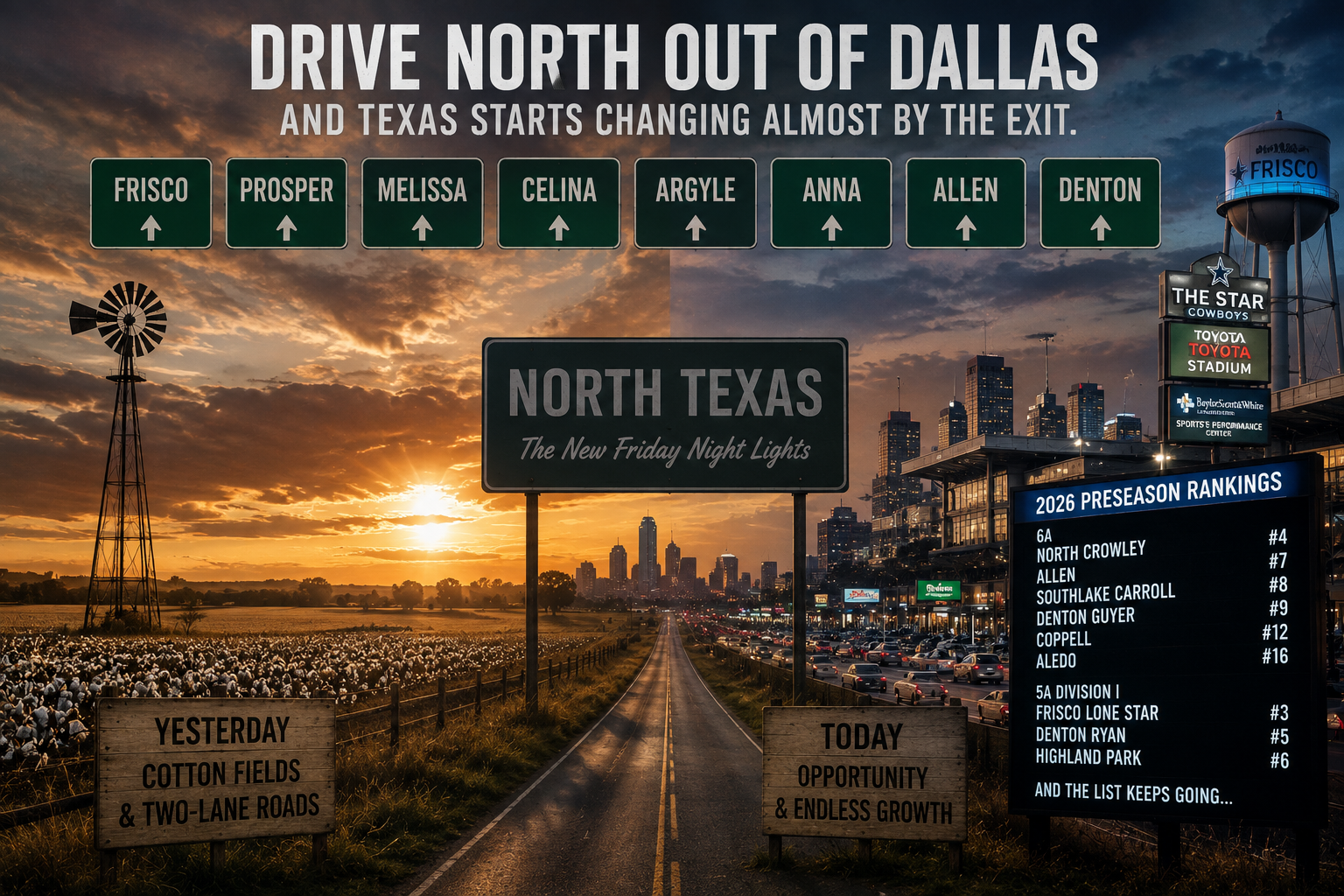
The cotton fields aren't entirely gone.
They're just increasingly difficult to find behind the toll roads, shopping centers, youth sports complexes and subdivisions that appear to reproduce when nobody is watching.
These aren't the towns Hollywood taught America to associate with Friday Night Lights.
Maybe Hollywood needs a new camera.
Because look at the 2026 preseason rankings.
In Class 6A:
North Crowley — No. 4.
Allen — No. 7.
Southlake Carroll — No. 8.
Denton Guyer — No. 9.
Coppell — No. 12.
And Aledo, newly arrived among Texas' largest schools, sits at No. 16.
This isn't one dominant program carrying a region.
It's an ecosystem.
And the hardware backs it up.
Aledo has 12 state championships.
Southlake Carroll has eight.
Allen has five.
Denton Guyer has two.
North Crowley has two.
That's 29 state championships among five programs in the same general North Texas football orbit.
And then there's Aledo.
ALEDO IS THE STANDARD NOW
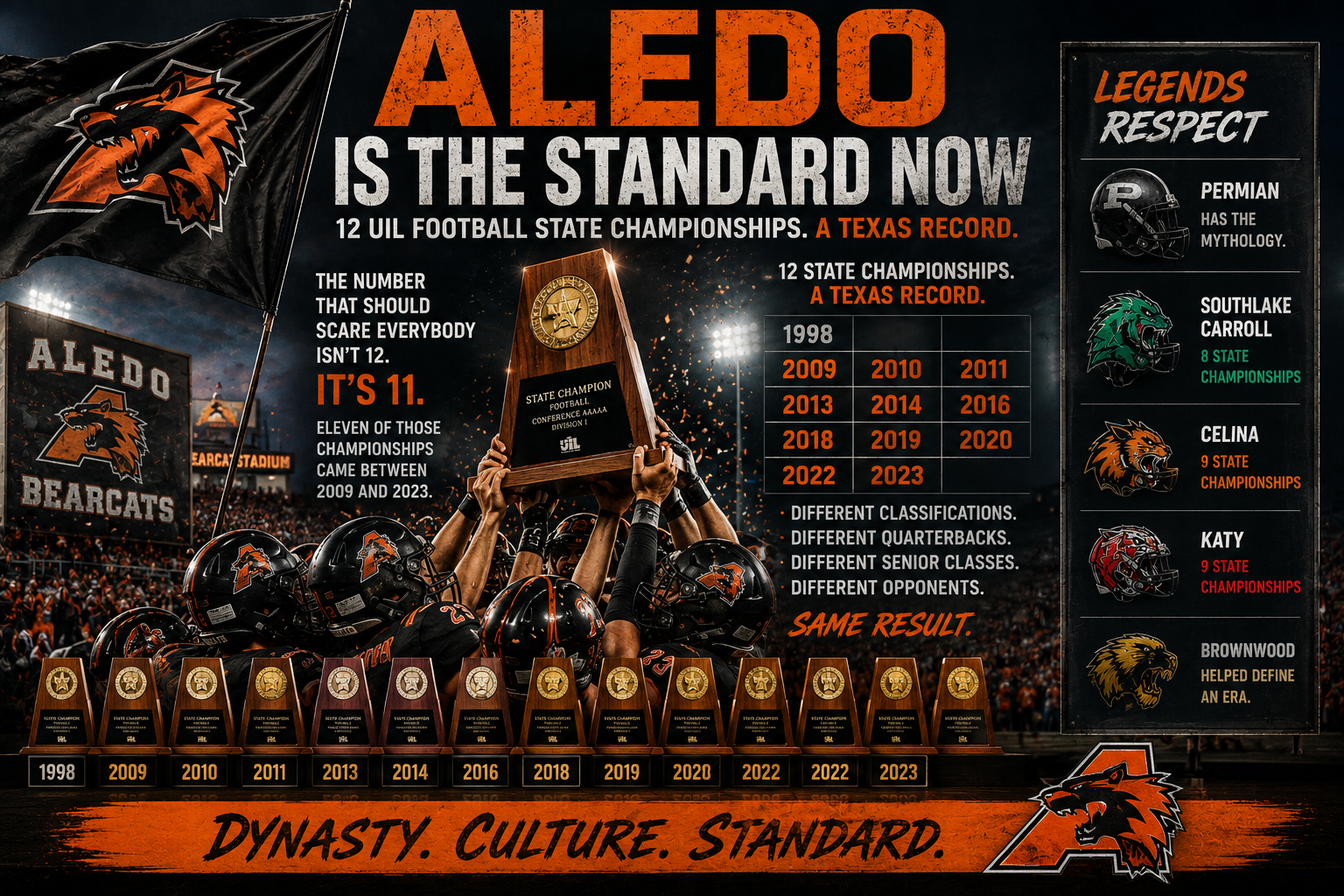
At some point, history becomes too overwhelming to argue with.
Aledo has reached that point.
The Bearcats own a Texas-record 12 UIL football state championships:
1998.
2009.
2010.
2011.
2013.
2014.
2016.
2018.
2019.
2020.
2022.
2023.
But the number that should scare everybody isn't 12.
It's 11.
Eleven of those championships came between 2009 and 2023.
This isn't a dusty trophy case built when players wore leather helmets and somebody's grandfather played both ways because apparently hydration hadn't been invented yet.
This is modern domination.
Different classifications.
Different quarterbacks.
Different senior classes.
Different opponents.
Same result.
There are legendary programs all over Texas.
Permian has the mythology.
Southlake Carroll has eight championships.
Celina has nine.
Katy has nine.
Brownwood helped define an earlier era of Texas football.
But Aledo has taken the standard and moved it.
Twelve championships.
Nine since 2013.
Six since 2016.
Dynasties are supposed to end when the great senior class graduates.
Aledo apparently misunderstood the assignment.
They just graduate those kids and find twelve more.
Now the Bearcats move into Class 6A, where Texas keeps its largest schools and some of the deepest football programs in America.
Maybe that's Aledo's final test.
Or maybe it's just Tuesday.
At this point, calling Aledo one of the greatest programs in Texas high school football history feels unnecessarily polite.
They're the standard now.
Everybody else is chasing them.
AND NORTH TEXAS KEEPS COMING
Drop into 5A Division I.
Frisco Lone Star is No. 3 in Texas.
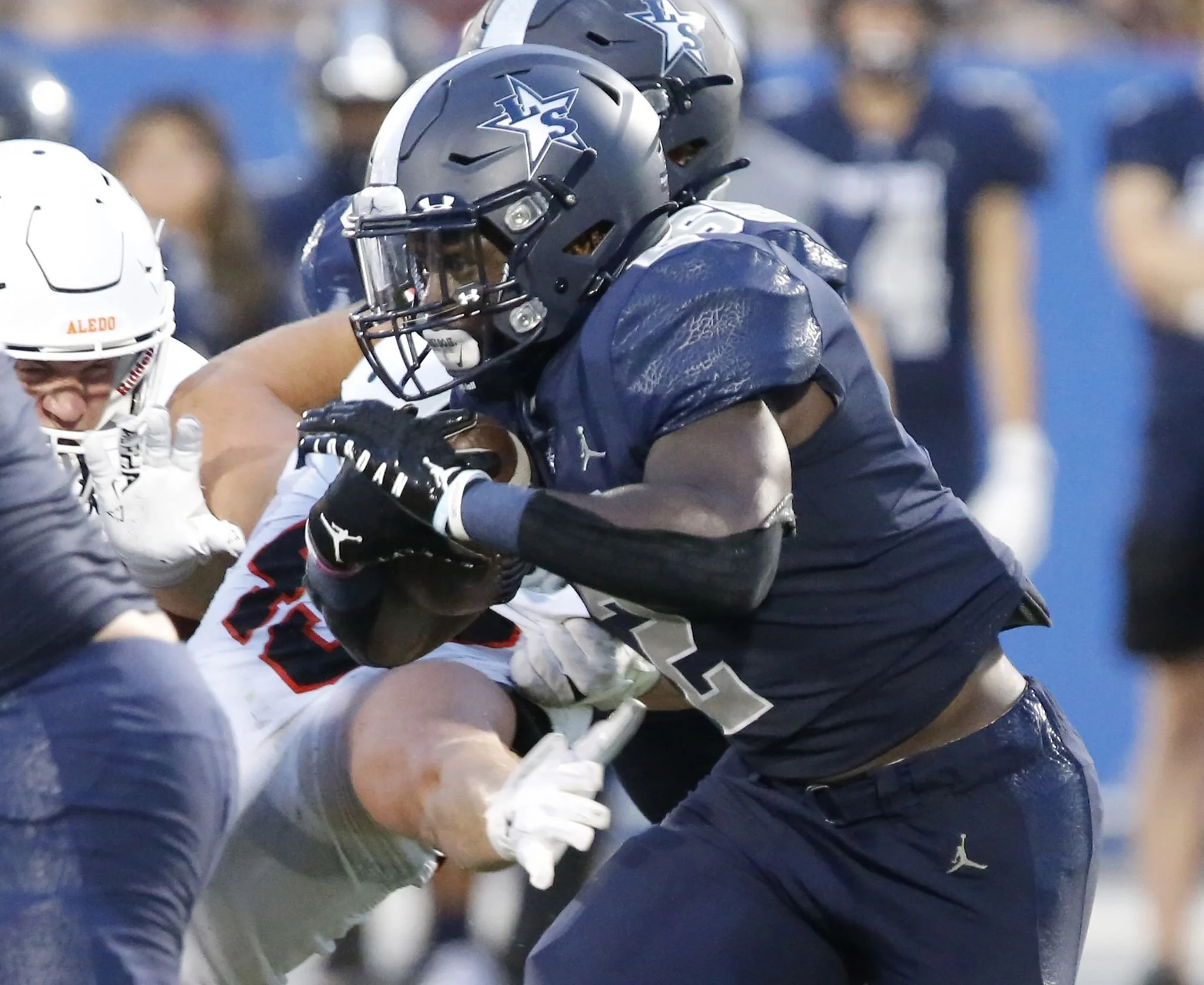
How Frisco Lone Star's Ashton Jeanty could stand alongside Texas high school football legends
Copyright: Stewart F. House Photography, Credit: Special Contributor, Creator: Stewart F. House
Denton Ryan is No. 5.
Highland Park is No. 6.
Melissa is No. 11.
Frisco Reedy is No. 23.
Then move to 5A Division II.
Argyle is No. 2.
Anna is No. 5.
Lovejoy is No. 14.
Celina is No. 20.
Frisco Panther Creek is No. 22.
And these aren't all programs living on preseason hype.
Highland Park has six state championships.
Denton Ryan has three.
Argyle has two.
Melissa has one.
Anna has one.
And then there's Celina.
Nine state championships.
Nine.
At that point you don't really need a trophy case.
You need a trophy room and possibly a zoning permit.
The Bobcats won championships in 1974, 1995, 1998, 1999, 2000, 2001, 2005, 2007 and 2024.
They went 16-0 in 2024, won another state championship, then followed it with a 14-1 season in 2025.
Celina enters 2026 with changes surrounding the program and a new chapter under former Rider coach Marc Bindel, which makes the Bobcats one of the more fascinating teams in North Texas.
Because Celina isn't trying to become a football town.
Celina already is one.
The question is whether a program carrying nine championship trophies can keep operating at the standard it created for itself.
That's not pressure in most places.
In Celina, that's August.

Some schools play high school football. These schools helped make Texas Friday Night Lights legendary.
The Friday Night Legends Collection celebrates the programs, stadiums, rivalries, communities, players, coaches, and generations of fans that built the culture of Texas high school football.
Each school selected for the collection receives its own vintage-inspired design celebrating its football tradition. And every shirt carries the exclusive FNL Texas HS Football Legends Patch on the back—a badge recognizing that school as part of the Friday Night Legends collection.
Small Towns. Big Dreams. Friday Night Lights.
From West Texas stadiums to DFW powerhouses, these are the schools and communities that helped turn Friday nights into something bigger than a football game.
Wear the school. Wear the history. Wear the legend.
MORE SCHOOLS COMING!!
IF YOU WANT TO SEE YOUR HS EMAIL US DIRECTLY TO REQUEST!
LONE STAR IS KNOCKING ON THE DOOR
Then there is Frisco Lone Star.
No state championships.
Yet.
And that word matters.
The Rangers have reached the state championship game twice.
In 2015, Lone Star lost to Cedar Park.
In 2025, the Rangers went 15-1, reached the 5A Division I championship game and fell to Smithson Valley.
Now they're back at No. 3 in Texas entering 2026.
At this point Lone Star isn't trying to prove it belongs.
That argument is over.
The question is whether the Rangers can finally finish the last game.
Because a state championship at Lone Star wouldn't simply belong to Lone Star.
It would be the first football state championship in Frisco ISD history.
And that brings us to perhaps the best example of what has happened to Texas football.
FRISCO SHOULDN'T MAKE SENSE
Frisco shouldn't look like an old West Texas football town.
That's exactly the point.
There isn't one school carrying the identity of the entire city.
There are many.
In 2026, three Frisco ISD programs begin the season in the statewide Top 25.
Lone Star — No. 3.
Reedy — No. 23.
Panther Creek — No. 22.
Lone Star went 15-1 last year.
Reedy has quietly put together seasons of 10-1, 10-2, 10-3 and 8-4 since 2022.
And Panther Creek may represent modern North Texas better than anybody.
The school has barely existed long enough for alumni to start complaining about how much better things were when they went there.
Its varsity records:
2022 — 3-7.
2023 — 11-2.
2024 — 10-2.
2025 — 9-3.
Now Panther Creek is ranked No. 22 in Texas.
That's North Texas growth in four lines.
The old West Texas model was a program passed from fathers to sons.
The North Texas model sometimes feels like somebody opens a school on Tuesday and by Friday they have 1,800 students, an indoor practice facility, three private quarterback coaches and a sophomore receiver with four Division I offers.
Welcome to the Metroplex.
Apparently we're full.
We're building six more subdivisions anyway.
KEEP DRIVING NORTH
And here's where the argument becomes harder to dismiss.
Because this isn't just about giant suburban schools with massive enrollments and expensive facilities.
Keep driving.
The towns get smaller.
The stadiums get smaller.
The football doesn't.
In 3A Division I, Gunter is No. 2 and Paradise No. 3.
In 2A Division II, Collinsville is No. 5.
And Gunter isn't some charming little underdog.
Gunter is a monster.
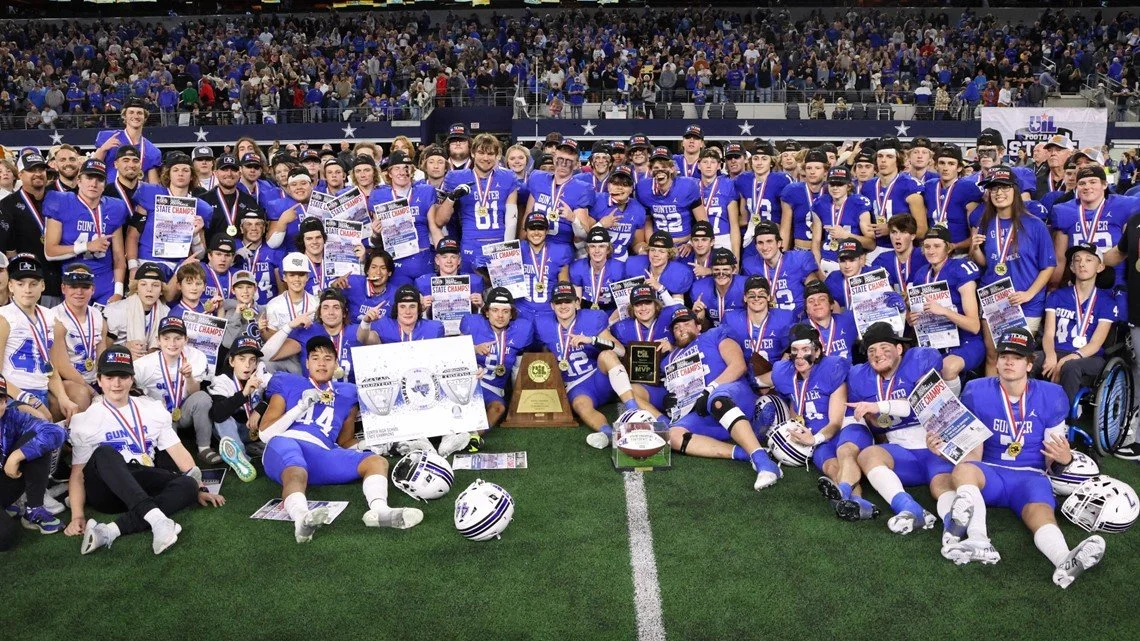
The Tigers have won five state championships since 2016:
2016.
2019.
2022.
2023.
2024.
Three consecutive championships from 2022 through 2024.
Paradise hasn't won one yet, but the Panthers have gone 46-10 over the last four seasons.
Collinsville hasn't won one either.
The Pirates have gone 46-9.
Different enrollment.
Different towns.
Different divisions.
Same expectations.
Same region.
North Texas.
SO WHAT HAPPENED?
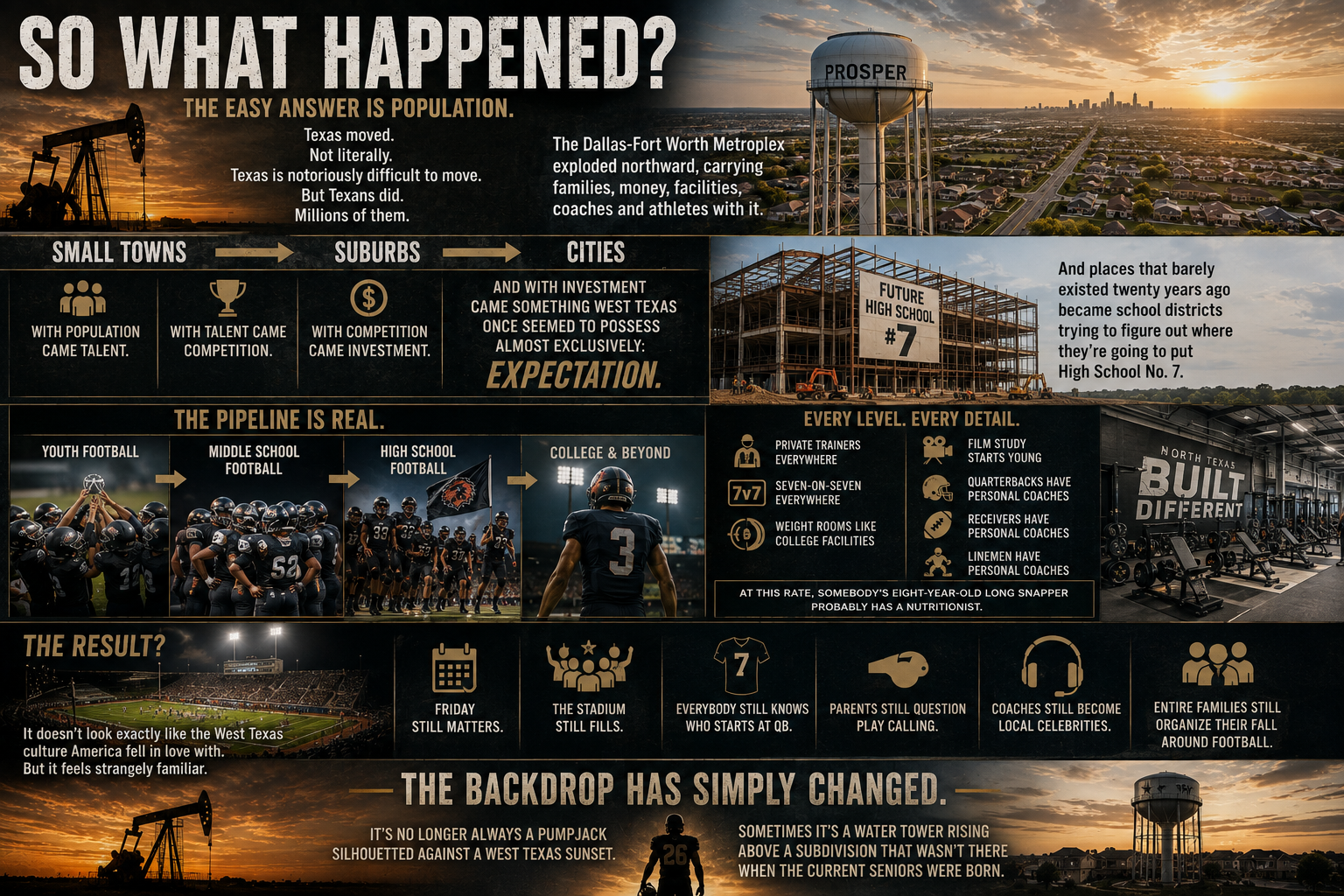
The easy answer is population.
Texas moved.
Not literally.
Texas is notoriously difficult to move.
But Texans did.
Millions of them.
The Dallas-Fort Worth Metroplex exploded northward, carrying families, money, facilities, coaches and athletes with it.
Small towns became suburbs.
Suburbs became cities.
And places that barely existed twenty years ago became school districts trying to figure out where they're going to put High School No. 7.
With population came talent.
With talent came competition.
With competition came investment.
And with investment came something West Texas once seemed to possess almost exclusively:
Expectation.
Kids in North Texas grow up playing together.
Youth football feeds middle school football.
Middle school football feeds high school football.
Private trainers are everywhere.
Seven-on-seven is everywhere.
Weight rooms look like college facilities.
Film study starts young.
Quarterbacks have personal coaches.
Receivers have personal coaches.
Linemen have personal coaches.
At this rate, somebody's eight-year-old long snapper probably has a nutritionist.
And because there are so many good programs packed into one region, everybody gets tested.
The result doesn't look exactly like the West Texas football culture America fell in love with.
But it feels strangely familiar.
Friday still matters.
The stadium still fills.
Everybody still knows who starts at quarterback.
Parents still question play calling.
Coaches still become local celebrities.
Entire families still organize their fall calendars around football.
The backdrop has simply changed.
It's no longer always a pumpjack silhouetted against a West Texas sunset.
Sometimes it's a water tower rising above a subdivision that wasn't there when the current seniors were born.
DON'T BURY WEST TEXAS
Now let's be careful.
Because declaring West Texas football dead would be both foolish and a terrific way to get yourself yelled at in several Dairy Queens.
West Texas can still play football.
Especially when the schools get smaller.
Wall is a legitimate contender.
Idalou is a legitimate contender.
Canadian is Canadian, which at this point is almost its own classification.
Stratford is No. 2 in 2A-DII.
Ropes is No. 3.
Gruver is No. 4.
Post and Panhandle sit inside the 2A-DI Top 10.
The Panhandle and South Plains still produce teams that will beat you for three hours, shake your hand afterward and leave you wondering why your athletic director voluntarily scheduled them.
This isn't an obituary for West Texas football.
Not even close.
It's a change of address.
West Texas still has towns where the football stadium is one of the largest structures for thirty miles.
It still has coaches who aren't merely coaching a kid.
They coached his brother.
They coached his father.
They probably taught his uncle driver's ed.
That culture isn't disappearing.
And neither is the football.
But West Texas no longer owns the mythology by itself.
THE LIGHTS ARE MOVING
Maybe that's the strangest part of all.
For generations, Texas high school football seemed inseparable from geography.
West Texas looked like football was supposed to look.
The isolation.
The oil.
The dust.
The endless horizon.
A stadium appearing in the darkness like some illuminated cathedral.
The landscape gave the game drama before anybody snapped the football.
North Texas doesn't have that landscape.
It has something else.
Growth.
Ambition.
Money.
Talent.
Families arriving every day.
Schools multiplying.
Communities searching for identities.
And football becoming one of the ways they find them.
A kid in Frisco doesn't need to know what Permian meant in 1988.
A kid in Melissa doesn't have to understand what Midland Lee once represented.
A kid in Argyle isn't intimidated by the ghosts of Odessa.
They're busy building ghosts of their own.
Their own stadiums.
Their own rivalries.
Their own championships.
Their own stories that fathers will someday tell their sons.
Thirty years from now, somebody somewhere in Texas will probably complain that high school football isn't what it used to be.
They'll talk about Aledo.
Allen.
Guyer.
Ryan.
Lone Star.
Argyle.
Celina.
Gunter.
Melissa.
They'll remember when those places owned Friday night.
Because that's what nostalgia does.
It convinces every generation that the lights were brightest when we were young.
Maybe they weren't.
Maybe the lights never actually go out.
Maybe they move.
For a long time, they burned brightest over the oil fields of West Texas.
MOJO.
ROHO.
Rebels.
Warbirds.
Coogs.
Coyotes.
You could see those lights from miles away.
You still can.
They're just a little dimmer now.
But turn east.
Look toward the seemingly endless glow of North Texas.
Aledo.
Allen.
Denton.
Argyle.
Celina.
Melissa.
Gunter.
Frisco.
The stadiums are full.
The expectations are enormous.
The trophies are accumulating.
And another generation of Texas kids is beginning to believe that Friday night belongs to them.
Maybe they're right.
Because Friday Night Lights haven't disappeared from Texas.
They've just found a new place to shine.