When Sports Stop Feeling Like Sports: Why Fans Are Exhausted by Being Told What They Must Support
By Ethan Caldwell | Sound Off Live
There was a time when sports felt like one of the last places Americans could still sit together.
Didn’t matter if you voted red or blue.
Didn’t matter what church you went to—or if you went at all.
Didn’t matter where you lived, what you believed, or what headline had you frustrated that week.
For three hours, none of it mattered.
You wore the jersey.
You screamed at the TV.
You high-fived strangers at sports bars.
And for just a little while, we remembered what unity actually felt like.
Not forced unity.
Real unity.
The kind that happens naturally when people rally around something bigger than themselves.
But somewhere along the way, sports changed.
Or maybe expectations did.
Because increasingly, fans are asking a question that feels impossible to ignore:
Why does everything now feel like a statement?
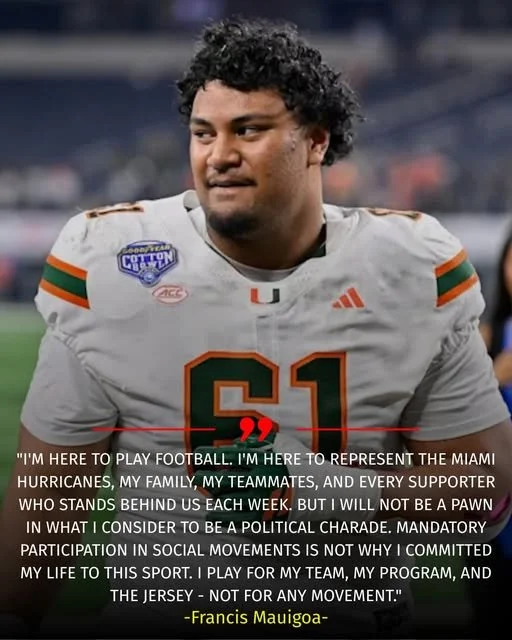
The question resurfaced again this week after a reported controversy involving a football player and symbolic participation in league messaging ignited passionate reactions online. Supporters argued athletes should never be compelled into public gestures they don’t personally support. Critics countered that visibility and representation matter deeply to communities who often feel unseen.
And honestly?
Both sides believe they’re protecting something important.
That’s what makes this conversation so difficult.
And so emotional.
Because beneath the outrage, the hashtags, and the comment sections full of people yelling past one another…
There’s a deeper question hiding underneath it all:
What should we actually expect athletes to represent?
For some people, the answer feels obvious.
Athletes have platforms.
Massive ones.
Kids watch them. Fans admire them. Communities rally behind them.
And with influence comes responsibility.
To those fans, sports have always been bigger than the game. Jackie Robinson mattered. Muhammad Ali mattered. Billie Jean King mattered. Sports have never existed in some perfect bubble detached from culture.
Fair point.
But there’s another side to this conversation that deserves honesty too.
Because millions of Americans aren’t angry because they hate people.
They’re tired.
Tired of feeling like every corner of life has become ideological.
Tired of being told silence is violence, disagreement is hatred, or hesitation automatically makes someone intolerant.
And maybe most of all…
They miss when sports simply felt like sports.
That doesn’t mean people shouldn’t support causes.
It doesn’t mean kindness doesn’t matter.
It doesn’t mean inclusion is unimportant.
But many fans are quietly asking:
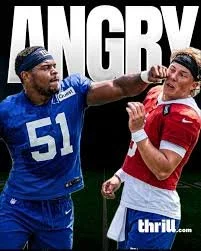
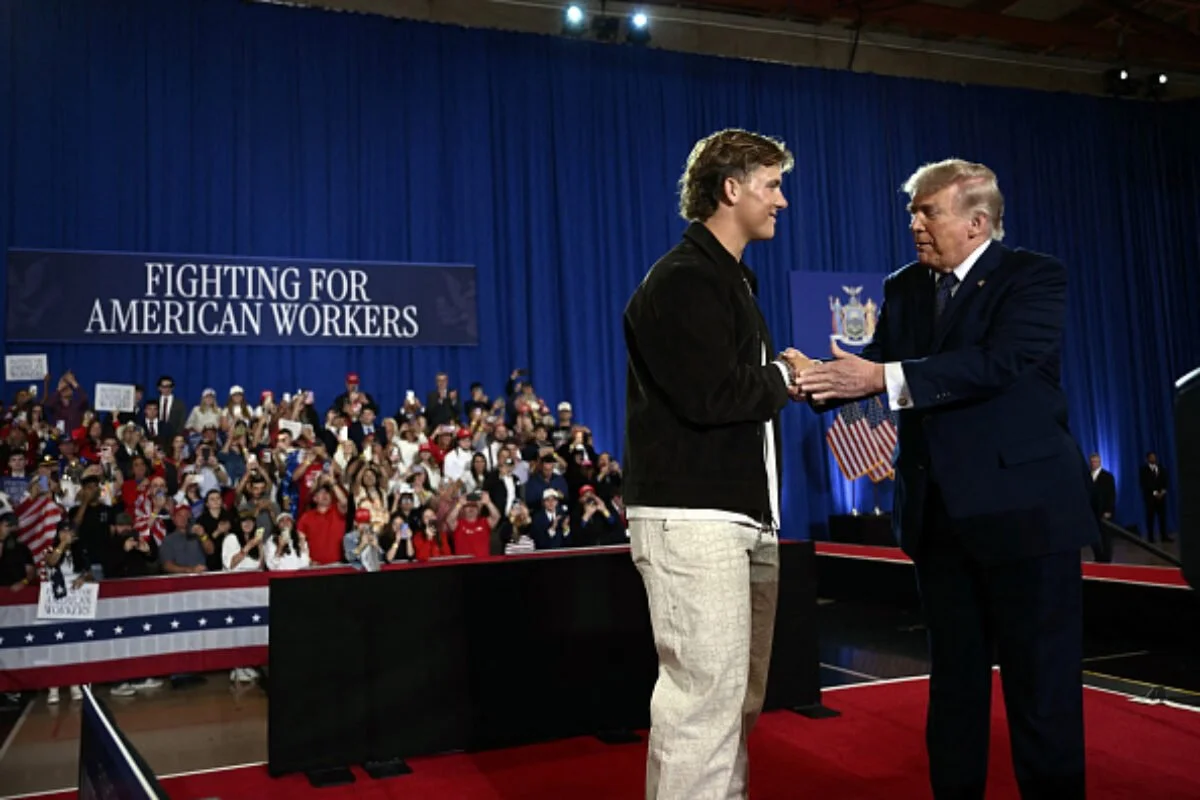
New York Giants linebacker Abdul Carter openly criticized his quarterback, Jaxson Dart, after Dart introduced U.S. President Donald J. Trump at a New York rally. Carter took to social media to express his disapproval, writing, "thought this sh!t was AI, what we doing man"
When did encouragement become expectation?
And when did expectation start feeling mandatory?
Because there’s a meaningful difference between supporting something voluntarily and feeling socially cornered into participation.
Most Americans actually understand this better than social media would have you believe.
We can disagree and still respect one another.
We can support people without agreeing on every worldview.
We can believe every person deserves dignity while still protecting the freedom to hold personal convictions.
That used to be called pluralism.
Now it often feels like a fight.
Here at Sound Off Live, we think there’s something deeper happening.
This isn’t really about one armband.
Or one controversy.
Or one athlete.
It’s about trust.
Sports used to be one of the few places Americans escaped division.
A place where merit mattered.
Effort mattered.
The logo on the front of the jersey mattered more than whatever trended online that morning.
And fans are afraid they’re losing that.
Not because athletes speak.
But because increasingly, it feels like everyone is expected to speak the same way.
That’s a dangerous place for a country to drift.
Not because disagreement is dangerous.
Disagreement is healthy.
But because freedom—including freedom of conscience—has always required room for people to think differently without being immediately cast as villains.
You don’t build unity by forcing symbolism.
You build unity by creating space where people who disagree can still stand shoulder to shoulder.
That’s what sports used to teach us.
And maybe—just maybe—that’s what America still desperately needs.
Because at the end of the day…
Most fans aren’t asking for perfection.
They’re asking for something simpler.
A game.
A jersey.
A reason to cheer together again.
And in a country this divided, maybe that’s more valuable than we realize.
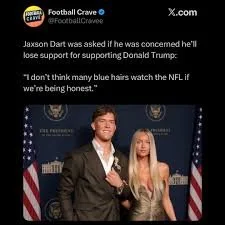
Supporters of Carter—as well as those who align with left-leaning or progressive views—have expressed frustration with Dart, citing the contentious nature of the former president, as well as comments Trump made at the rally questioning whether Dart could tackle women.
The two young Giants stars had successful rookie campaigns—Dart finished fourth in Offensive Rookie of the Year voting, and Carter finished fifth in Defensive Rookie of the Year voting. The front office and fans are watching closely to see how this political friction will impact the team's locker room chemistry heading into the season.
What do you think? Have sports become too political—or have they always reflected culture? Sound off below.