When Scripture Is Misapplied: A Biblical Response to Broad Claims About War and Prayer
White House press secretary Karoline Leavitt on Monday responded to recent comments from Pope Leo XIV suggesting God closes His ears to leaders who wage war, and addressed the U.S. response to the Latin Patriarch of Jerusalem being shut out of the Church of the Holy Sepulchre on Palm Sunday.
During a press briefing at the White House that focused heavily on the lingering war in Iran, Leavitt was asked to respond to the pope, who claimed during his homily in Rome on Sunday that Jesus Christ is the "King of Peace, who rejects war, whom no one can use to justify war." "He does not listen to the prayers of those who wage war, but rejects them," he continued, quoting Isaiah 1:15, when the prophet rebuked ancient Judah for its violence: "Even though you make many prayers, I will not listen: your hands are full of blood."

The Pope.
Recent comments from Pope Francis have stirred up quite the theological conversation—and not the quiet, thoughtful kind. More like the “did he really just say that?” kind.
He points to Isaiah 1:15 and essentially says God doesn’t listen to the prayers of people involved in war. And on the surface, you hear that and think, “Well… yeah, that sounds nice. Peace, love, everybody hold hands.” It hits you right in the feelings. Real clean. Real simple.
But then you actually open the Bible… and it’s like—hold on a second. What are we doing here?
Because when you step back and look at the whole of Scripture—not just one verse pulled out like it’s the only one in there—that idea starts to fall apart pretty quick.
It’s one of those moments where you go, “Are we reading the same book?”
The Danger of Isolating Scripture
The issue isn’t the verse itself—it’s how it’s being used. And right now, it feels a little like somebody grabbed one line out of the Bible, held it up, and said, “Alright, this is the whole message now. We’re good.”
But that’s not what’s happening in Isaiah. That warning was aimed at people living in straight-up hypocrisy—saying all the right things, doing all the wrong things. That’s very different from someone operating under authority, trying to do what’s right in a broken situation. Those aren’t the same category.
Taking that verse and stretching it across every situation involving war or military action… that’s a reach. That’s like reading one verse and then just freelancing the rest of it. And the Bible doesn’t really give you that option.
Because when you actually read it cover to cover, it’s not this one-note message of “everything is simple and clean.” It’s a full picture—justice, authority, responsibility—all of it playing out in a world that’s not perfect.
Which means sometimes the answer isn’t as easy as we’d like it to be… even if it would make for a much nicer quote.
The Biblical Framework for Authority and Justice

To understand this issue correctly, we must begin with the role of government.
In Romans 13, governing authorities are described as being established by God for a specific purpose: to restrain evil and uphold justice. The text explicitly states that authority “does not bear the sword in vain,” but serves as an instrument of justice against wrongdoing.

This is not symbolic language. It is a direct acknowledgment that force—when rightly applied—is sometimes necessary.
If God ordains governing authority, and that authority is tasked with confronting evil, then it follows logically that:
Not all use of force is immoral
Not all participation in conflict is condemned
And not all prayers connected to war are rejected
To suggest otherwise creates a contradiction within Scripture itself.
A Time for War, A Time for Peace
This balance shows up again in Ecclesiastes 3:8:
“There is a time for war and a time for peace.”
Now that’s not exactly a “live, laugh, love” verse. You’re not putting that on a pillow in your living room. But it’s honest.
It’s not glorifying war—it’s just telling you the truth about the world we actually live in. And the truth is, peace isn’t always maintained by sitting back and hoping everything works out. Sometimes evil shows up, and ignoring it doesn’t make it leave. Sometimes it has to be confronted to protect what’s good.
The Bible doesn’t celebrate conflict… but it also doesn’t pretend it doesn’t exist.
And if everything was supposed to be passive and hands-off all the time… then why does God have Archangel Michael?
I mean, you don’t create a warrior angel just for decoration. That’s not a “just in case we need vibes” kind of role.

Archangel Michael is a prominent celestial figure revered as the leader of God's armies, a warrior against evil, and a protector of believers in Christian, Jewish, and Islamic traditions. Known as the "Prince of Angels," he acts as a defender, guide for souls to heaven, and an advocate for humanity
God’s Direct Involvement in War
Now it really starts to fall apart when you open up the Old Testament.
Because once you get into books like Joshua and 1 Samuel, it’s not just that war happens… it’s that God is directly involved in it. Not casually. Not accidentally. He commands it in specific moments tied to judgment, justice, and His covenant.

That’s not a side note—that’s built into the foundation of Scripture.
So if we’re going to say, “God doesn’t listen to the prayers of anyone involved in war,” now we’ve got a real problem on our hands.
Because then you have to ask:
Were the people of Israel outside of God’s will… while doing exactly what God told them to do?
And even more than that—
Were their prayers just hitting the ceiling… in the middle of battles God Himself sent them into?
That’s where this whole idea starts to feel like trying to put together a puzzle with pieces from a completely different box.
It doesn’t line up.
And at some point, you’ve got to decide—are we going to reshape Scripture to fit a statement, or are we going to let Scripture define what’s actually true?
Because if you follow that claim all the way through, it doesn’t just bend the Bible a little…
It breaks it.
The Case of David: A Direct Contradiction
Then you get to King David… and this is where the whole argument really starts to wobble.
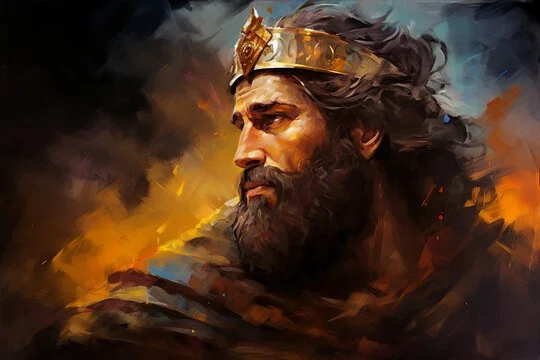
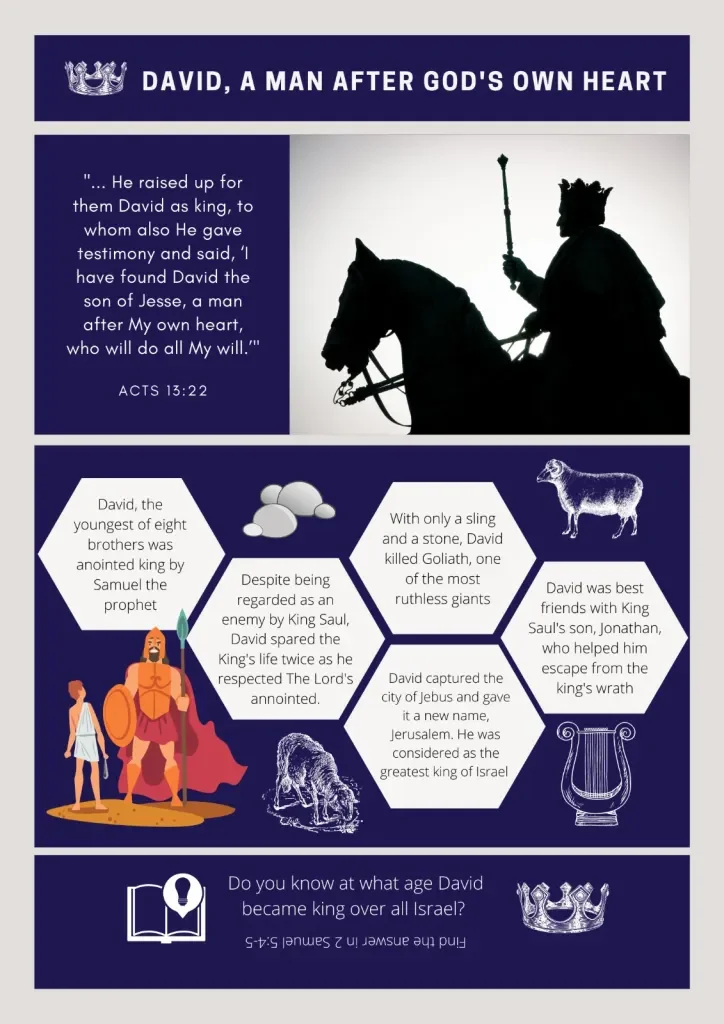
Because David isn’t some background character. This is a warrior, a king, and the Bible literally says he was a man after God’s own heart. That’s a pretty strong endorsement. You don’t get that title by accident.
Now let’s be honest about David:
He led armies
He fought real battles
He shed real blood
This wasn’t symbolic. This wasn’t theoretical. This was front-line, life-and-death leadership.
And yet at the very same time:
He prayed constantly
He sought God’s direction before going into battle
He wrote a huge portion of the Psalms—prayers people still cling to today in their hardest moments
So now you’ve got to wrestle with that.
Because if the idea is:
“God doesn’t listen to the prayers of anyone involved in war”
…then what do you do with David?
Was God just ignoring him the whole time?
Was David out there writing Psalms like, “Lord, hear my prayer”… and God’s response was, “I would, but you’ve got armor on, so I’m out”?
That doesn’t make any sense.
In reality, what you see is the exact opposite.
God did hear David.
God did guide David.
God did establish a covenant through David that ultimately points all the way to Christ.
So the issue was never:
“David was a man of war, therefore God rejected him.”
The issue was always the heart.
David repented.
David sought God.
David aligned himself under God’s authority.
And because of that, God didn’t turn away from him—He walked with him.
So if being involved in war automatically disqualified someone from being heard by God… David’s entire life would be one big contradiction.
But it’s not.
It’s actually one of the clearest examples in all of Scripture that proves the opposite.
The Implications for Today
If the idea were true—that God categorically rejects the prayers of those involved in war—then modern implications would be severe.
It would mean:
Governments cannot fulfill their biblical role of restraining evil
Military leaders cannot seek God for wisdom or protection
Those defending the innocent would be spiritually disqualified in the very moment they need God most
That is not a biblical conclusion.
That is a theological overreach.
A More Accurate Biblical Standard
Scripture does not draw the line at war vs. peace.
It draws the line at righteousness vs. wickedness.
God does not reject prayer because of conflict.
He rejects prayer rooted in:
injustice
hypocrisy
unrepentant sin
At the same time, He responds to those who seek:
wisdom
protection
justice
and alignment with His will
—even in the midst of conflict.
Final Reflection
There’s a real temptation to take something complicated—like war, justice, and morality—and boil it down into a clean little sentence that sounds good on a headline. Everybody loves that. Makes things easier. You don’t have to think as hard.
But the Bible just doesn’t cooperate with that.
It doesn’t deal in slogans. It deals in truth.
It doesn’t hand you one verse and say, “Good luck, build your whole theology off that.”
It calls for discernment. It calls for context. It calls for actually reading the whole thing… which, I’ll be honest, feels like something we might want to revisit here.
Because the claim that God doesn’t listen to the prayers of those involved in war—yeah, it sounds powerful. It hits emotionally. But when you run it through the full weight of Scripture, it doesn’t hold up. Not even close.
At that point, it starts to feel like we’re skipping a few chapters… maybe a few books… honestly, maybe a whole semester.
And I say this respectfully—but also… not really—this might be one of those moments where you go, “Hey, maybe we crack open the notes again.” Maybe a quick refresher. Little trip back to seminary. Sit in the front row this time. Take a pen.
Because the God of the Bible isn’t sitting up there saying,
“Hey, if things get messy down there, don’t even bother praying.”
That’s not who He is.
The Bible shows a God who:
establishes authority
confronts evil head-on
hears the prayers of those seeking righteousness
and stays sovereign even when the world gets complicated
Which means the issue was never, “Are you in a war?”
The real question has always been,
“Are you walking in righteousness while you’re in it?”
That’s a lot less catchy.
But it’s a whole lot more accurate.