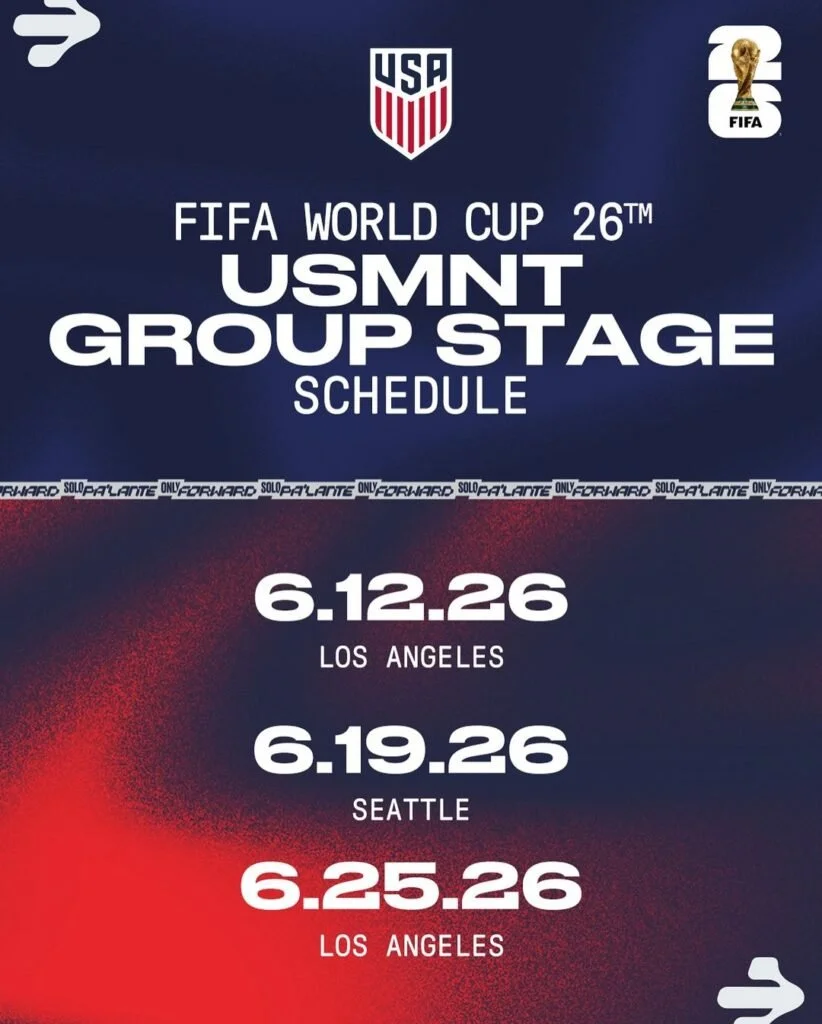

Why the United States Could Be This World Cup’s Biggest Surprise
By: Rubin Snyder
Why the United States Could Be This World Cup’s Biggest Surprise
Every World Cup produces a team that defies expectations.
In 2002, it was South Korea, riding the energy of a home tournament all the way to the semifinals. In 2022, Morocco captured the world’s attention with a historic run to the final four, becoming the first African nation to do so. These teams weren’t supposed to be there—until they were.

As the 2026 World Cup approaches on home soil, there is growing reason to believe the United States could be next.
This isn’t a prediction built on blind optimism. It’s grounded in three realities: the evolution of the American player pool, the unique advantage of hosting the tournament, and the influence of a manager who understands how to navigate high-pressure environments.
A Different Kind of U.S. Team
For decades, the identity of the U.S. men’s national team was built on resilience, physicality, and organization. The program earned respect, but rarely entered tournaments with the technical quality needed to control matches against elite opposition.
That is no longer the case.
The current generation of American players has developed in some of the most competitive environments in the world. They are more comfortable on the ball, more tactically aware, and more capable of dictating play than any previous U.S. squad. This shift doesn’t guarantee success—but it changes the ceiling of what is possible.
Instead of simply trying to disrupt opponents, the United States now has the ability to impose its own style of play. In a tournament setting, that matters.
The Power of Playing at Home
History suggests that hosting a World Cup provides more than just logistical comfort—it creates momentum.
South Korea’s 2002 run was fueled by an energized home crowd that turned every match into an emotional advantage. Morocco, while not a host nation, benefited from overwhelming regional support in Qatar that created a similar effect.
The United States will experience that advantage on a larger scale.
Packed stadiums, familiar environments, and a growing soccer culture could all contribute to a level of support the program has never experienced. In a knockout tournament, where games are often decided by moments rather than margins, that kind of energy can shift outcomes.

Don’t look now, but the USMNT is coming. Here’s why Team USA could surprise everyone at the 2026 World Cup and make a serious run.
Momentum in the World Cup is real. Once it builds, it tends to carry.
The Pochettino Factor
The arrival of Mauricio Pochettino adds another layer to the conversation.
Pochettino has spent his career managing elite players in high-pressure environments. More importantly, he understands that success in tournaments is not purely tactical—it is psychological. Teams that advance deep into the World Cup are not always the most talented, but they are often the most unified, resilient, and confident.
His recent comments reflect that understanding. He pointed to past semifinal runs by underdog nations and emphasized that football does not always follow logic. That perspective matters. It signals a belief that this team is not simply participating—it is competing with intent.
Belief alone is not enough, but without it, deep runs do not happen.
A Tournament Built for Opportunity
The expanded 48-team format introduces a new dynamic. With an additional knockout round, the path to the semifinals now requires three consecutive wins after the group stage.
That is a significant challenge—but it is also an opportunity.
In tournament play, matchups, form, and confidence often outweigh long-term rankings or reputation. A team that finds rhythm at the right time can advance quickly, especially if it avoids early encounters with the world’s top sides.
For the United States, the margin for error is still small—but the pathway is clearer than it has been in previous tournaments.
Why This Feels Different
It is easy to dismiss the idea of a U.S. semifinal run as overly ambitious. Historically, the program has not reached that level in the modern era, with its deepest run being a quarterfinal appearance in 2002.
But history also shows that breakthrough moments tend to come when expectations are modest.
The pieces are in place:
A more technically advanced player pool
A home-field advantage that cannot be overstated
A manager with experience at the highest levels
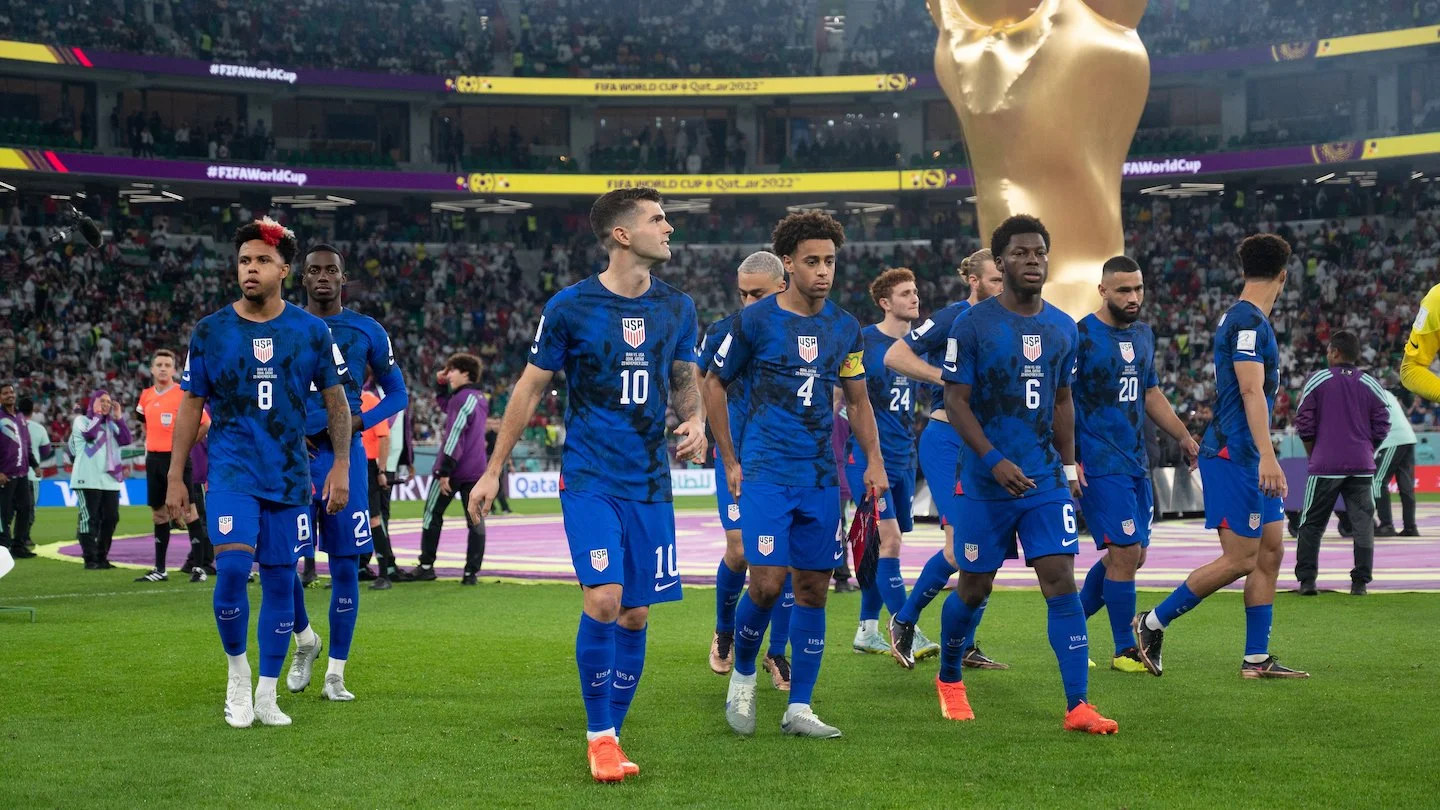
USA Soccer World Cup 2026: Why the USMNT Could Shock the World
A tournament structure that allows for momentum
None of this guarantees success. But it does create the conditions where something unexpected becomes possible.
Final Thought
Every World Cup reshapes the global conversation about the game. A new team emerges, a new story unfolds, and assumptions are challenged.
The United States may not enter the 2026 tournament as a favorite. But it may not need to.
Because if recent history has taught us anything, it’s this:
The teams that change everything are rarely the ones people expect.
And this summer, the United States has a real opportunity to be that team.
This Is the Most Talented U.S. Pool Ever
For the first time in program history, the United States isn’t just sending players abroad—they’re producing contributors at top European clubs.
Start with the core:
Christian Pulisic (AC Milan) – Still the face of the team, now more mature, more consistent, and thriving in Serie A
Weston McKennie (Juventus) – A physical, box-to-box midfielder who brings edge and leadership
Tyler Adams (Premier League) – The heartbeat defensively; when healthy, he changes the entire structure of the team
Yunus Musah (AC Milan) – Dynamic, press-resistant, and capable of progressing the ball under pressure
That midfield alone is something the U.S. has never had at this level—technically capable and battle-tested in Europe.
The Attack Has Real Match-Winners
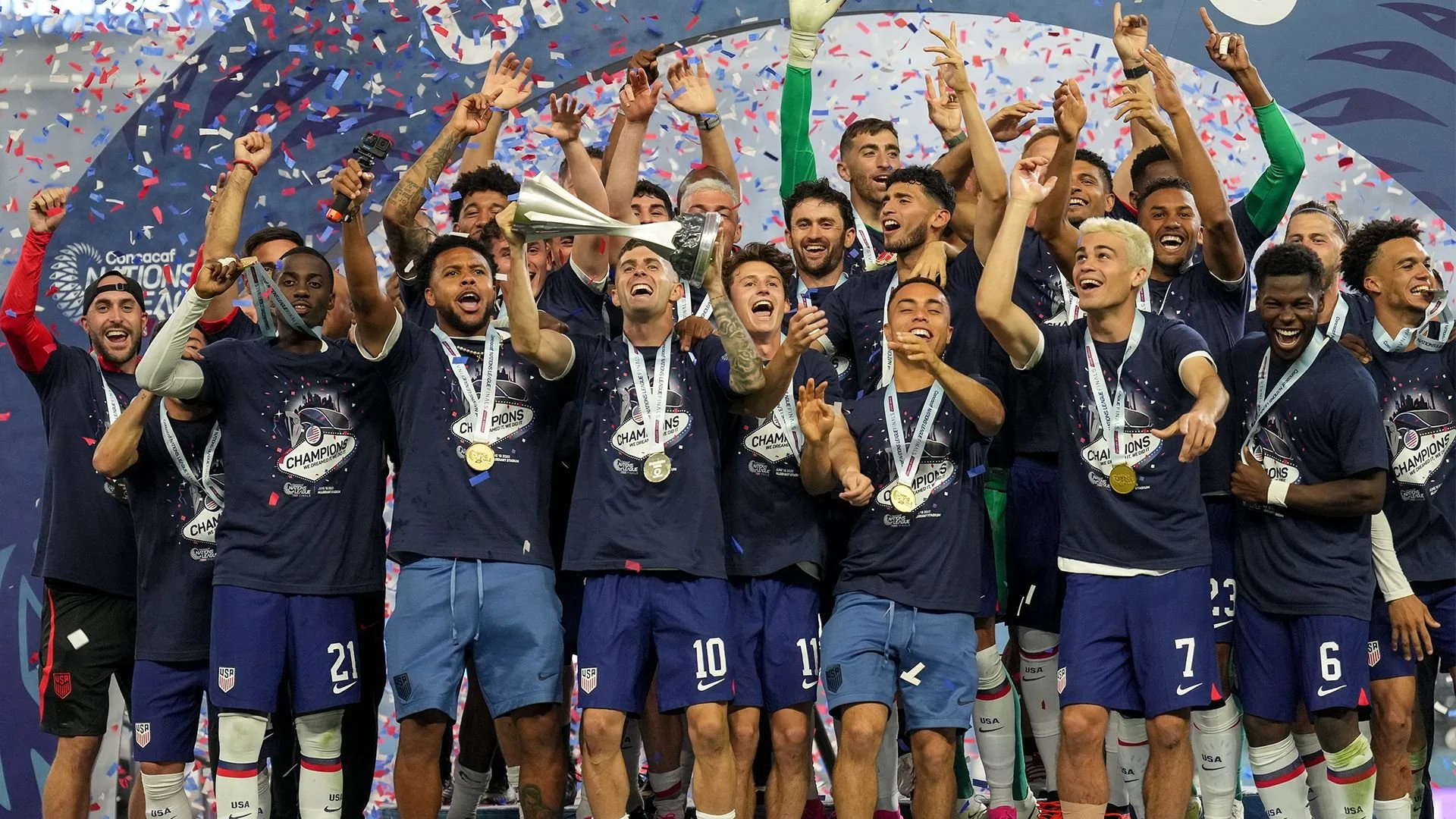
Top 4 or Bust for the USMNT?
This is where the ceiling rises.
Tim Weah (Juventus) – Pace, directness, and the ability to stretch defenses
Folarin Balogun (AS Monaco) – A true No. 9 with finishing instincts the U.S. has lacked for years
Giovanni Reyna (Borussia Dortmund / loan spells) – The most naturally gifted attacker in the pool, capable of unlocking defenses
And then there’s the wild card:
Ricardo Pepi (PSV Eindhoven) – In form, confident, and proving he can score consistently at the club level
For once, the U.S. doesn’t just have “guys who work hard up top.”
They have players who can decide games.
Defense and Goalkeeping Are Quietly Solid
Defensively, this group is more stable than it gets credit for:
Antonee Robinson (Fulham) – One of the most reliable left backs in the Premier League
Sergiño Dest (PSV / Barcelona ties) – Attacking threat from the right side
Chris Richards (Crystal Palace) – Physical presence with Premier League experience
Tim Ream (Fulham) – Veteran leadership and positional intelligence
In goal:
Matt Turner (Premier League experience) – Proven shot-stopper, capable in big moments
It’s not world-class across the board—but it’s good enough, especially in tournament play.

Depth Is Finally Real
This might be the biggest difference from past teams.
The U.S. isn’t relying on 11 players anymore.
They have options:
Brenden Aaronson (energy and pressing)
Malik Tillman (technical attacking depth)
Joe Scally (defensive versatility)
That matters in a World Cup, where injuries, fatigue, and matchups can change everything.
Now Add Home Soil and Pochettino
Then you layer in:
A home World Cup
Packed stadiums
A country starting to rally behind the sport
And a manager like Mauricio Pochettino, who understands how to build belief in a group.